
 EN
EN
 ar
ar bg
bg hr
hr cs
cs da
da nl
nl fi
fi fr
fr de
de el
el hi
hi it
it ko
ko no
no pl
pl pt
pt ro
ro ru
ru es
es sv
sv tl
tl iw
iw id
id lv
lv lt
lt sr
sr sk
sk sl
sl uk
uk vi
vi et
et hu
hu th
th tr
tr fa
fa ms
ms hy
hy ka
ka ur
ur bn
bn mn
mn ta
ta kk
kk uz
uz ku
ku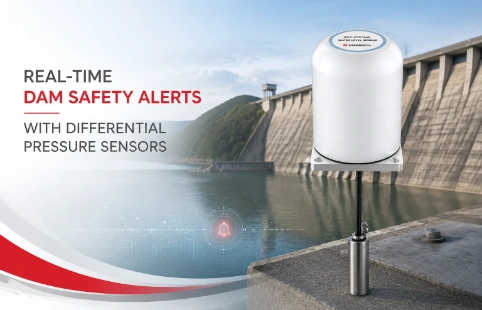
Real-Time Dam Safety Alerts with Differential Pressure Water Level Sensors
Key Takeaways An alert chain needs more than a sensor: define field in...

Precision Semiconductor Based Temperature Sensors Built for Field Demands
Temperature readings often serve as an early warning in geotechnical projects—a subtle shift can point to water seepage in a dam or stress changes in a bridge foundation. Semiconductor based temperature sensors have become a practical choice for these long-term monitoring jobs. Unlike thermocouples, they deliver a linear output over a broad range and don’t need cold-junction compensation, reducing data logger complexity. At Kingmach, we integrate this sensor technology into instruments that hold up under real-world conditions: vibrating wire sensors, digital loggers, and customized arrays. The focus is on repeatable measurements and signal stability across months of fieldwork. For engineers who need to track thermal gradients in concrete or soil, the high sensitivity of semiconductor elements can reveal trends that simpler probes miss. Our role is to supply the sensing components and support that make these insights accessible without requiring constant recalibration or complex wiring. We’ve applied them in everything from permafrost monitoring to tunnel lining assessments, always matching the setup to the site’s specific needs.
Technical Detail
Kingmach Measurement & Monitoring Technology Co., Ltd. applies semiconductor based temperature sensors across its range of geotechnical instruments. These sensors exploit the temperature coefficient of a p-n junction, producing a voltage or current that varies predictably with heat. In our designs, that translates to a resolution of 0.1°C or better over spans like -55°C to 150°C—useful for freeze-thaw studies or curing temperature logging. Because the sensing element and signal conditioning can sit on the same chip, the resulting probes are compact and draw low power, which matters when you’re running a battery-powered logger in a remote borehole for a year. We’ve customized these sensors into various housings: stainless steel bodies for direct burial, slim profiles for embedment in concrete, and rugged cables for marine environments. Each version goes through thermal cycling and long-term drift tests before shipping, so it holds accuracy across the project’s lifespan. Outputs are typically 0-5V or 4-20mA, tying easily into existing SCADA systems. Our support team helps with sensor placement guidelines and data interpretation—common requests from clients who deploy dozens of points across a dam gallery or a landslip area. While no sensor is perfect, the combination of high sensitivity, inherent linearity, and low maintenance makes semiconductor types a strong candidate for many geotechnical applications. Kingmach stocks standard models and also engineers special versions when a project needs a non-standard length or a particular communication protocol.
News
Key Takeaways An alert chain needs more than a sensor: define field in...
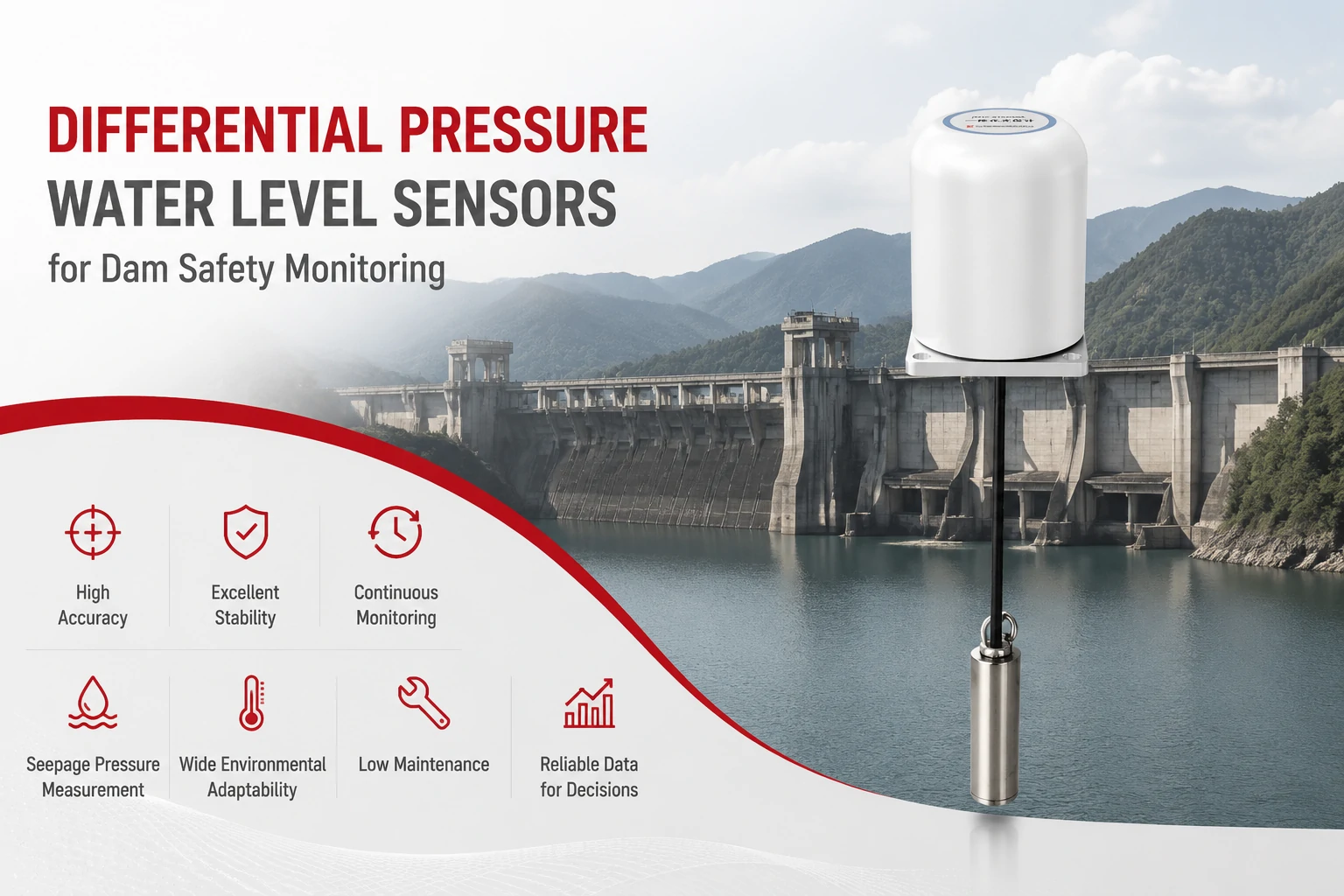
Key Takeaways The strongest fit is usually a confined, submerged, or s...
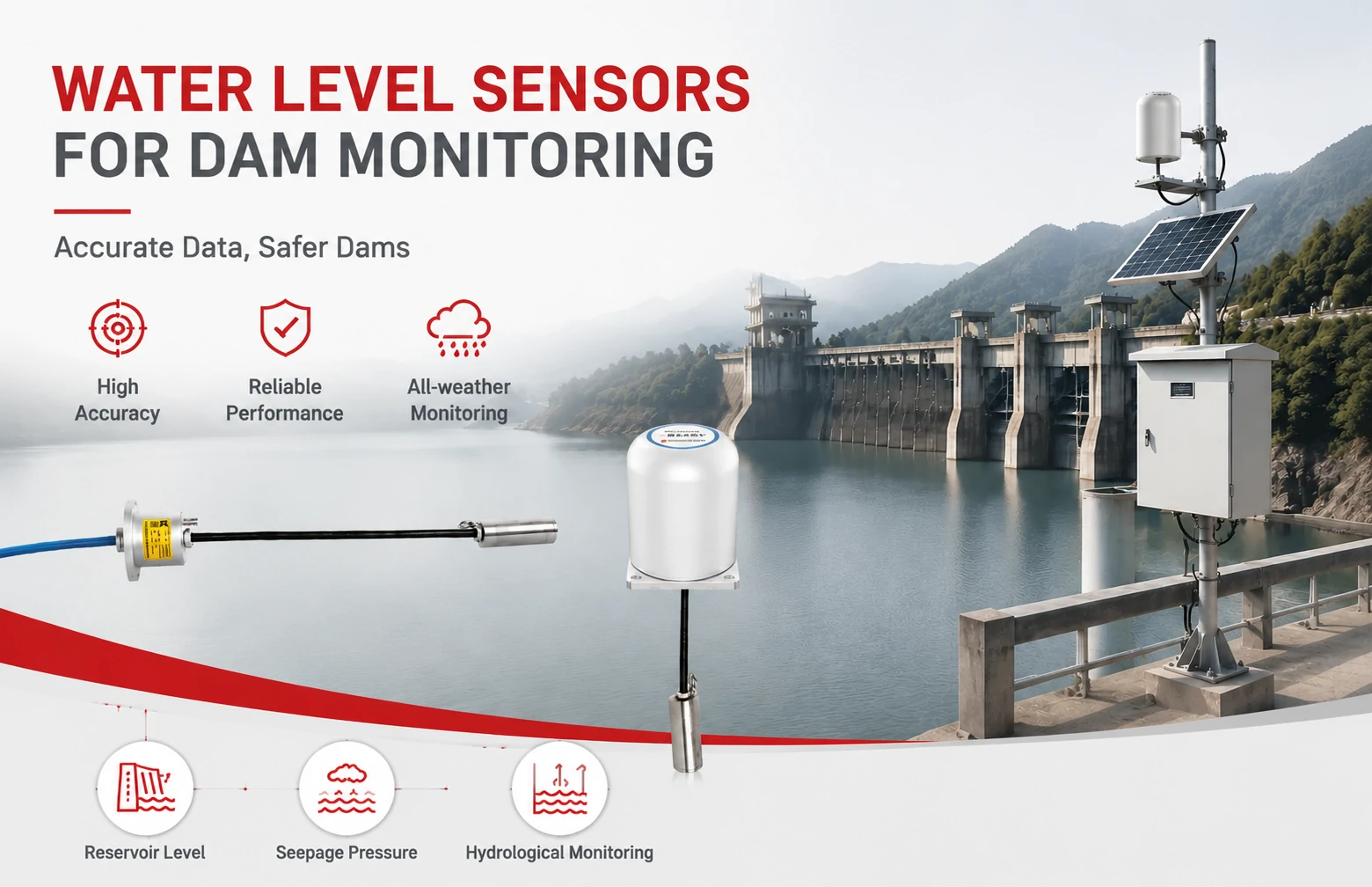
Kingmach Water Level Sensors for Dam Monitoring: A Buyer's Guide to Differential Pre...
Products
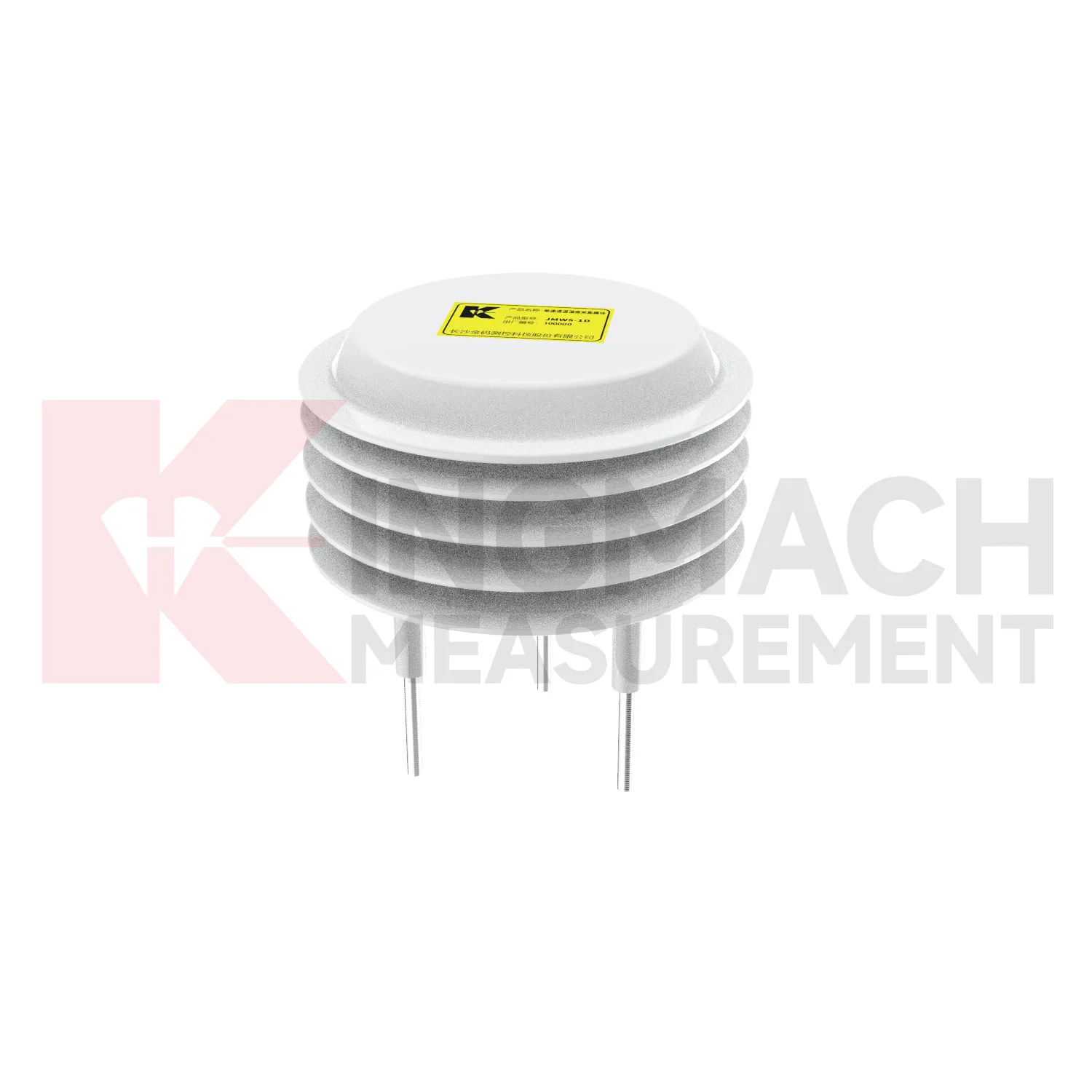
Single-Channel Temperature and Humidity Acquisition Module JMWS-1D
View Details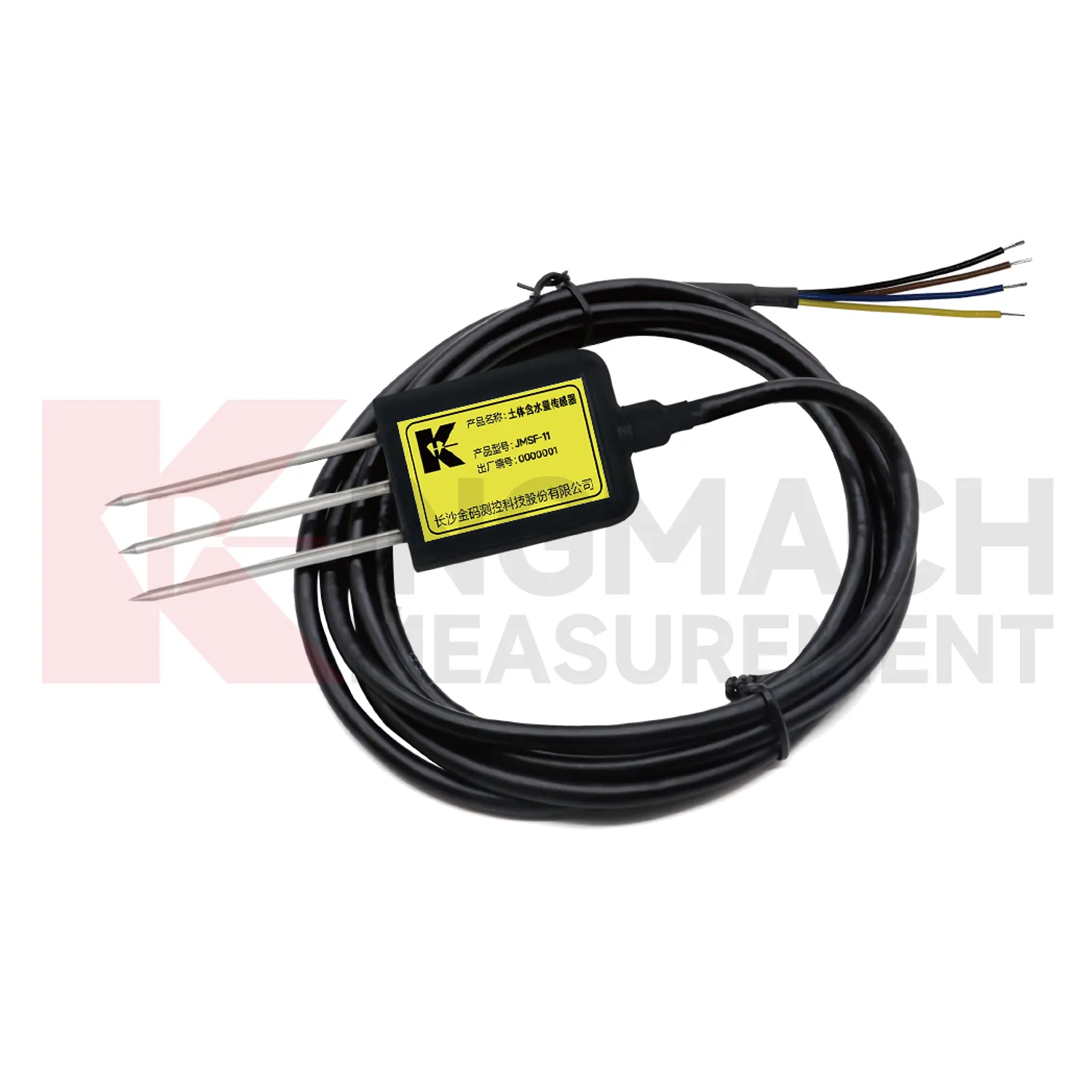
FAQ
Semiconductor sensors give a linear output directly, so you skip the cold-junction compensation and polynomial math that thermocouples need. This makes data loggers simpler and reduces connection errors. They’re also more sensitive—commonly 10 mV/°C vs. 40 µV/°C for a thermocouple—so small temperature swings are easier to pick up. The trade-off is a narrower temperature range, but for most geotechnical work (-40°C to 125°C) that’s sufficient.
Yes, and that’s a common application. We provide versions with a rugged stainless steel housing and sealed cable entry that survive the alkaline environment of fresh concrete and the heat of hydration. They typically read well past the 28-day mark, helping engineers verify that temperature differentials stay within spec to prevent thermal cracking.
Initial accuracy is around ±0.5°C for most models, with better figures on request. Drift over a year is generally under 0.1°C if the sensor isn’t pushed to the temperature extremes constantly. We publish typical drift data from long-term tests in water baths; you’ll normally see the sensor settle within the first month and stay stable after that.
Standard analog versions output 0-5V or 4-20mA. If your system needs digital communication, we can build sensor nodes with RS485 Modbus or SDI-12 on custom order. This includes the sensor element, signal conditioning, and addressing in one weatherproof package. Lead time and cost depend on quantity and protocol specifics.
With voltage-output sensors, you run one per channel to avoid loading errors. For 4-20mA current loop types, you can wire several in series as long as the total loop resistance stays within the logger’s drive capability. We can help check the math for your specific logger model and cable run lengths—just send us the details.
Share your product type, target capacity, and application requirements. Our team can review the details and recommend a practical next step.
Related Keywords
If you are interested in our products or want to become our partner.
Please leave your contact information, our team will contact you as soon as possible.
Mail: [email protected]
Contact Us: +8613808434127
Address: No. 188 Tongzipo West Rd, Changsha, Hunan, China